

Struggling to drop weight despite cutting calories is deeply frustrating. Many individuals blame themselves for a lack of willpower. In reality, underlying metabolic and endocrine dysfunction actively blocks fat loss. For specialized insights into GLP-1 plateaus, review our guide on “Why am I not losing weight on Ozempic”.
If you are researching the medical reasons for inability to lose weight, understanding metabolic resistance is the first step toward recovery.
At Zenyva, our clinical weight management team evaluates the biological barriers that stop fat breakdown. We do not prescribe restrictive diets that fail long-term. Instead, we identify and treat the root hormonal, metabolic, and systemic causes preventing weight loss.
Why Cant I Lose Weight Medically
When standard caloric deficits fail, patients ask: why cant i lose weight medically? The human body relies on hormones to regulate hunger, metabolic rate, and fat storage. When this endocrine balance is disrupted, physiological mechanisms actively preserve energy stores.
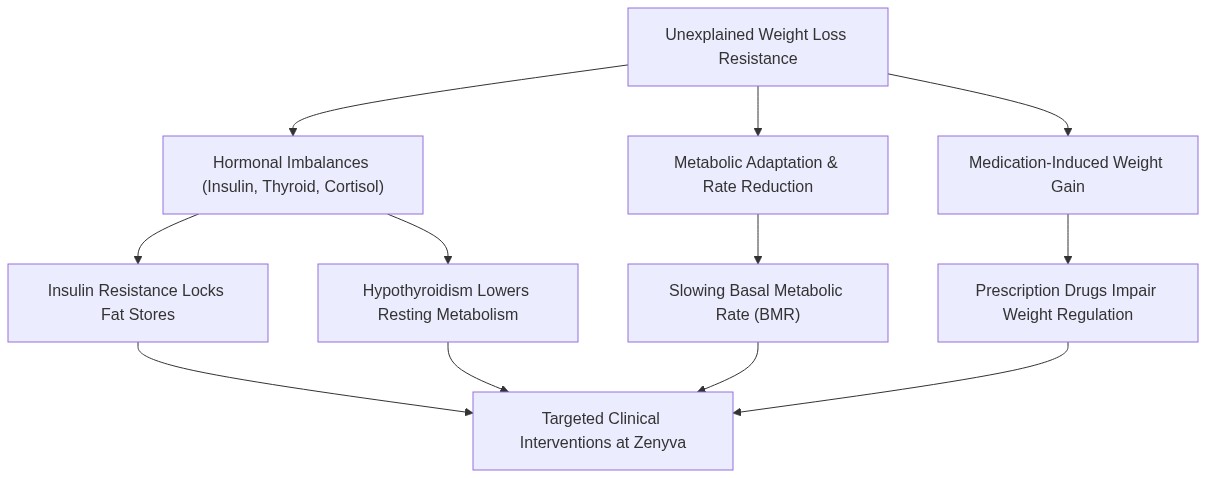
Endocrine Dysregulation and Insulin Resistance
Insulin resistance is one of the most common medical reasons for inability to lose weight. When cells resist insulin, the pancreas produces higher levels of this storage hormone to clear blood glucose. Elevated insulin signals fat cells to store energy. Simultaneously, it blocks lipolysis, which is the breakdown of fat. Patients with insulin resistance frequently experience intense carbohydrate cravings, fatigue, and central abdominal fat.
Hypothyroidism and Basal Metabolic Rate Reduction
The thyroid gland acts as the body’s primary metabolic thermostat. Conditions like primary hypothyroidism or Hashimoto’s thyroiditis reduce production of T3 and T4 hormones. This lowers your basal metabolic rate. As a result, your body burns significantly fewer calories at rest. Even a minor deficit in thyroid hormone levels makes standard weight loss difficult without medical thyroid replacement therapy.
| Medical Condition | Primary Hormonal/Metabolic Defect | Impact on Weight Management |
|---|---|---|
| Insulin Resistance | Chronically high circulating insulin | Blocks fat breakdown (lipolysis) and accelerates fat storage |
| Hypothyroidism | Reduced T3 and T4 production | Decreases basal metabolic rate (BMR) by up to 20-30% |
| Cushing’s Syndrome | Excessive serum cortisol levels | Promotes visceral fat deposition and muscle loss |
| PCOS | Androgen excess & insulin resistance | Causes severe abdominal adiposity and weight loss resistance |
Hidden Medical Causes of Weight Gain
Beyond primary thyroid and insulin disorders, several hidden medical causes of weight gain alter metabolic rate and appetite signaling without obvious symptoms.
Subclinical Cortisol Elevation and Chronic Stress
Chronic stress triggers continuous activation of the adrenal glands. This process causes persistently elevated cortisol levels. High cortisol mobilizes glucose into the bloodstream, triggering secondary insulin release. It directs fat deposition straight to the abdominal area. In addition, elevated cortisol breaks down lean muscle tissue, directly lowering daily calorie burn.
Polycystic Ovary Syndrome (PCOS) and Metabolic Resistance
PCOS affects approximately 10% to 15% of women of reproductive age in India. It serves as a primary driver of hormonal weight gain. The combination of high androgens and systemic insulin resistance impairs glucose uptake in body tissues. Women with PCOS often experience severe metabolic resistance. They gain weight easily despite low calorie intake. Targeted protocols, such as those evaluated in our clinical treatment for PCOS weight gain, are typically needed to restore metabolic balance. Visit Zenyva for specialized medical evaluations.
Doctor Explains Weight Loss Resistance
When patients consult an obesity specialist, a thorough diagnostic evaluation replaces guessing games with evidence-based medicine. Here is how a doctor explains weight loss resistance and designs an effective clinical intervention.
Clinical Vignette: Overcoming Severe Metabolic Adaptation
A 42-year-old female patient visited our clinic after struggling for three years with weight loss resistance. She ate under 1,200 calories per day and walked 8,000 steps daily. Yet her weight remained stuck at 88 kg. Comprehensive lab testing revealed subclinical hypothyroidism alongside marked insulin resistance.
We implemented a medical management plan. We combined thyroid optimization with targeted GLP-1 receptor agonist therapy. She lost 14 kg over six months without extreme starvation. Her case shows that treating underlying pathology restores normal fat metabolism.
Pharmacological Side Effects and Prescription Medications
Certain necessary prescription medications can hinder weight loss efforts. Corticosteroids, beta-blockers, antidepressants, antipsychotics, and older diabetes drugs often cause fluid retention or lower metabolic rate. A medical review determines if alternative drugs can be substituted safely.
Comprehensive Medical Weight Loss Strategies
Modern medical weight management moves beyond simple diet sheets. Based on detailed blood panels, treatment options include:
- Targeted Insulin Sensitizers: Medications like metformin lower circulating insulin and improve glucose uptake.
- FDA-Approved GLP-1 Receptor Agonists: Prescription therapies such as semaglutide slow gastric emptying and regulate appetite in the brain. Learn more about how modern pharmacotherapy works in our guide on FDA approved GLP-1 therapy.
- Doctor-Supervised Nutrition & Lifestyle Protocols: Structured medical nutrition therapy tailored to your metabolic rate.
Dr. Sagar Kajbaje, a leading national obesity specialist physician, offers personalized medical weight management programs online across India, as well as in-person consultations at his Thane clinic. Start your weight loss journey by calling us at 9324933010, messaging us on WhatsApp, or booking an online consultation.
Frequently Asked Questions
What blood tests should I request for unexplained weight loss resistance?
Doctors recommend a metabolic panel including fasting glucose, fasting insulin, HbA1c, thyroid panel (TSH, Free T3, Free T4), morning cortisol, lipid profile, and sex hormone levels.
Can stress alone prevent me from losing weight?
Yes. Chronic stress elevates cortisol. High cortisol promotes insulin resistance, increases appetite for high-calorie foods, and causes visceral fat accumulation.
How do doctors treat medical weight loss resistance?
Obesity specialists treat resistance by correcting hormonal deficits, optimizing thyroid function, improving sleep, and prescribing FDA-approved anti-obesity medications like GLP-1 receptor agonists under strict clinical oversight.